-Binay Bishnu KC, Campus Chief ,SASTHM, Biratnagar
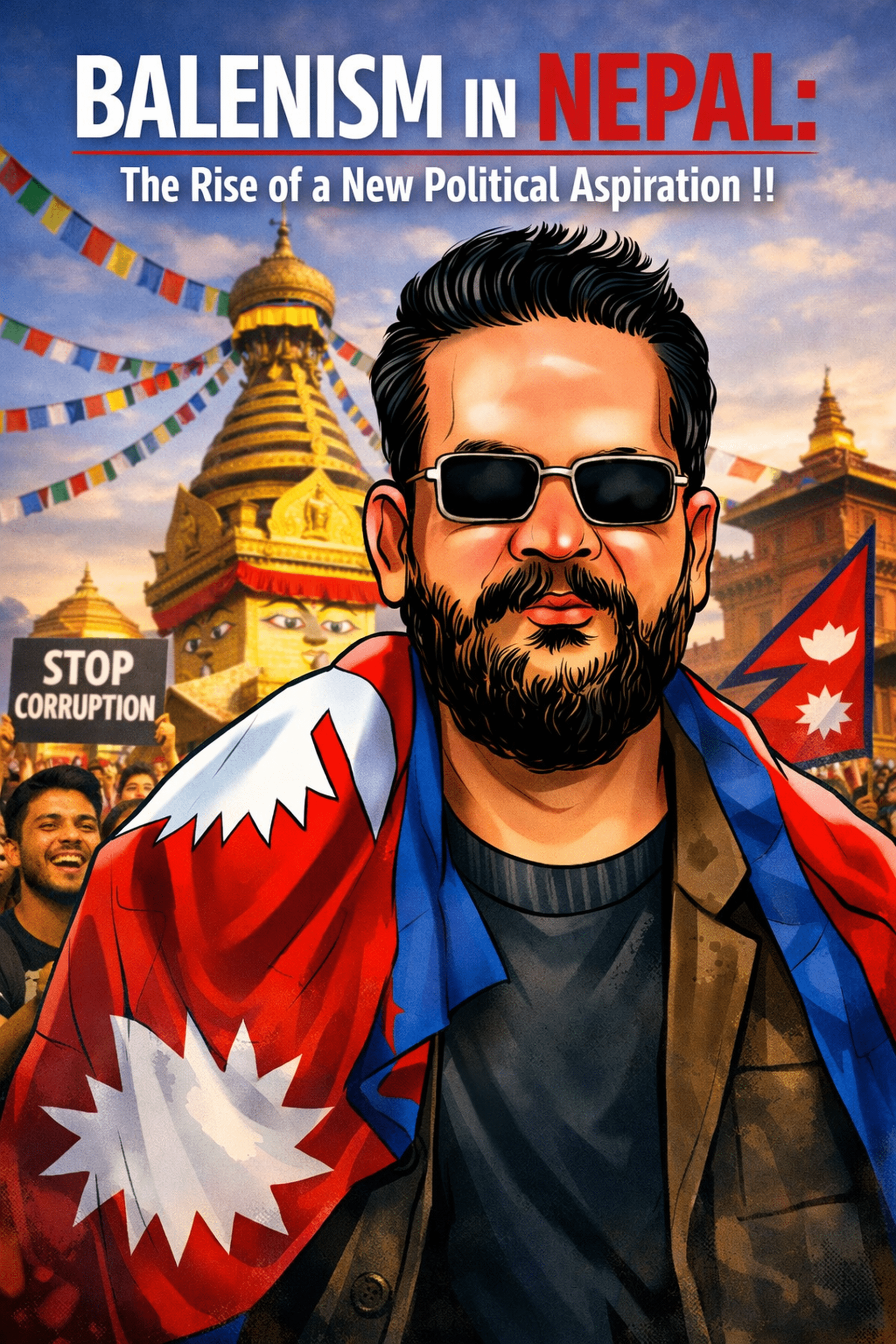
In recent years, a new word has quietly entered Nepal’s political conversation: “Balenism.” It is not a political ideology written in books, nor a party doctrine. Instead, it reflects a growing public feeling shaped by the rise of Balendra “Balen” Shah.
Many Nepalis, especially young people, see in Balen something different from the traditional political leadership they have known for decades.
For years, Nepal’s politics has largely been dominated by the same leaders and the same parties. Governments change, coalitions break, and power shifts, but many citizens feel that everyday problems remain the same. Corruption, slow bureaucracy, unemployment, and poor urban management have created deep frustration among people.
In that atmosphere, Balen’s rise felt like a surprise. An independent candidate, with no major party backing, winning the mayoral election of Kathmandu sent a strong message. It showed that politics in Nepal might not be as closed as people once believed.
But Balenism is not just about winning an election. It is about a style of leadership. Many supporters admire his directness, his willingness to challenge powerful interests, and his effort to enforce rules in the city. Whether people agree with every decision or not, they see someone who appears willing to act.
Another reason behind Balen’s popularity is the connection he has built with young people. Nepal is a young country, full of educated and digitally connected citizens. Through social media, Balen speaks directly to the public, often bypassing traditional political channels. This creates a sense of closeness that many politicians struggle to achieve.
For many youths, Balen represents possibility. He represents the idea that someone outside the traditional party circle can step forward and lead.
Of course, admiration alone cannot solve national problems. Nepal’s political and economic challenges are complex and require strong institutions, teamwork, and long-term policies. No single person can fix everything.
Yet the rise of Balenism reveals something important about the present moment. It shows that people are searching for honesty, accountability, and fresh leadership. It reflects a quiet demand for politics that feels closer to the people and less tied to old habits of power.
Whether Balen becomes a bigger national leader or remains a strong local figure, the message behind Balenism will likely continue to influence Nepali politics.
In the end, Balenism is not just about one person.
It is about a generation that is beginning to believe that change is possible.